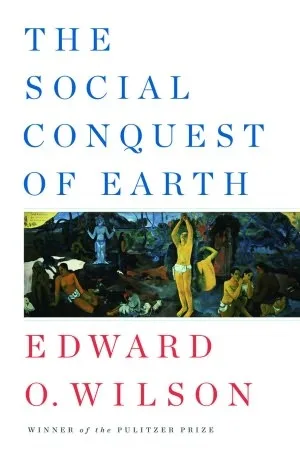
Edward O. Wilson examines the evolution of eusociality, a rare biological phenomenon where groups practice cooperative brood care and a division of labor. He rejects the widely accepted theory of kin selection, arguing instead that multi-level selection—the tension between individual and group interests—drives social complexity. By comparing the rise of ants, bees, and termites with the biological history of humans, Wilson identifies the specific ecological conditions and genetic mutations that allowed these species to dominate the planet. He explains how the transition from solitary living to stable campsites facilitated the development of culture, language, and morality.
This book serves readers interested in evolutionary biology and the intersection of genetics and the humanities. It appeals to those who want a biological explanation for human impulses like tribalism, altruism, and religious belief. Readers walk away with a framework for understanding why humans are perpetually conflicted between selfish behavior that benefits the individual and cooperative behavior that strengthens the community. The text provides a scientific basis for the origins of history and the future of the species.
- Published
- 2012
- Language
- EN