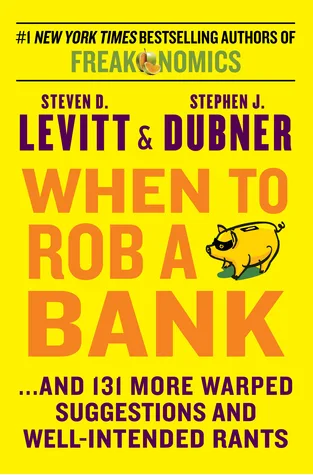
Steven Levitt and Stephen Dubner outline a methodology for unconventional problem-solving by applying economic logic to everyday life. The authors argue that effective reasoning requires discarding artificial limits and admitting ignorance when data is unavailable. They detail techniques such as thinking like a child to simplify complex issues, identifying the actual incentives that drive human behavior rather than the ones people claim to follow, and understanding how to quit failing projects early to minimize sunk costs. Through examples like competitive eating strategies and healthcare reform, the book demonstrates how to reframe questions to find non-obvious solutions.
Business professionals and decision-makers read this book to refine their analytical toolkit and avoid cognitive biases. It provides a blueprint for looking past conventional wisdom to identify the root causes of systemic inefficiencies. Readers walk away with practical frameworks for conducting small-scale experiments and communicating persuasive arguments through storytelling. The text serves as a guide for anyone looking to bypass traditional bureaucracy by using data and behavioral psychology to influence outcomes in corporate or social environments.
Outward-looking, growth-minded and clear-cut; an easy read.
Best for readers like The Practical Optimizer. Which reader are you?
- Published
- 2014
- Language
- EN