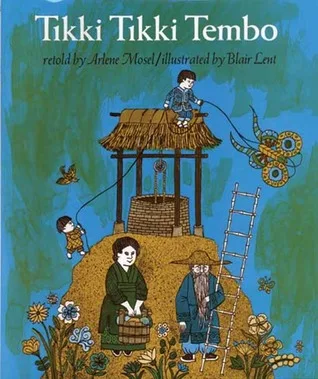
In a small village in ancient China, a mother honors her firstborn son by giving him the incredibly long name Tikki Tikki Tembo-no Sa Rembo-chari Bari Ruchi-pip Peri Pembo, while her second son is named simply Chang. When Chang falls into a well, his brother quickly summons help to save him. However, when the eldest son later falls into the same well, Chang struggles to repeat his brother’s full name to his mother and the Old Man with the Ladder. The delay caused by the lengthy recitation nearly costs the boy his life, leading to the cultural shift toward shorter names.
Parents and young children read this book to experience the rhythmic, repetitive cadence of the central name, which functions as a linguistic exercise and a memory challenge. Readers walk away with an understanding of how oral traditions use repetition to build tension in storytelling. The book demonstrates the practical consequences of rigid social customs and provides a rhythmic structure that helps children develop phonetic awareness and verbal pacing. It serves as a classic example of a "why" story that explains the origin of a specific cultural practice through a cautionary domestic accident.
Practical, outward-looking and clear-cut; an easy read.
Best for readers like The Practical Optimizer. Which reader are you?
- Published
- 1968
- Language
- EN