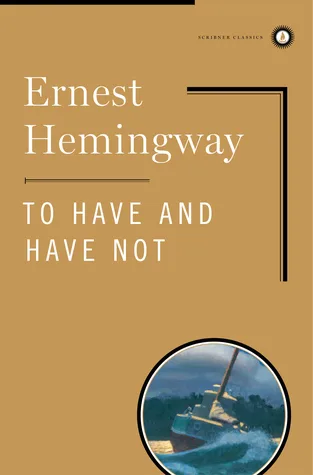
Harry Morgan, a fishing boat captain in Key West, struggles to support his family during the Great Depression. When a wealthy client abandons him without paying, Morgan turns to the black market, smuggling illegal immigrants and contraband alcohol between Cuba and the Florida coast. The narrative shifts perspectives to contrast Morgan’s desperate, violent survival tactics with the decadent, hollow lives of the yacht-owning elite. As federal authorities close in, Morgan enters a fatal confrontation with Cuban revolutionaries, leading to his final realization about the impossibility of individual self-reliance.
This novel serves readers interested in the economic disparity of 1930s America and the mechanics of nautical crime. Those who study hardboiled fiction read it to analyze the transition from individualist action to collective social consciousness. The reader walks away with a blunt understanding of how poverty forces moral compromise and a clear view of the structural divide between those with capital and those who labor at sea.
Insights from To Have and Have Not
“I don't know who made the laws but I know there ain't nothing can keep a man from eating.”
Harry Morgan starts as a decent man with a boat. Seeing him slowly lose his morals just to feed his kids is heartbreaking.
The rich people on their yachts in Key West seem so empty. They have everything but lack the grit Harry has in his little finger.
“He was a man. He was all man.”
Marie is the heart of this story. Her love for Harry is messy and real. She sees him as a man, not just a provider.
Being an honest fisherman doesn't pay the bills in a depression. Harry turns to smuggling because he feels he has no other choice.
- Published
- 1937
- Publisher
- Scribner
- ISBN
- 9780684818986
- Language
- EN
Quotes by Ernest Hemingway
More →Courage is grace under pressure.
There is nothing noble in being superior to your fellow man; true nobility is being superior to your former self.
The world breaks everyone, and afterward, many are strong at the broken places.
A Farewell to Arms