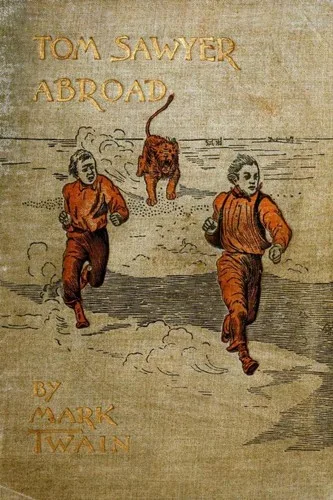
Tom Sawyer, Huckleberry Finn, and the escaped slave Jim accidentally board a futuristic hot-air balloon piloted by a volatile inventor. After being swept across the Atlantic Ocean, the trio finds themselves navigating the vast Saharan desert. The narrative focuses on their technical struggles to control the aircraft and their survival against lions, sandstorms, and bandits. Much of the text consists of long debates where Tom attempts to apply his book-learning to their surroundings, while Huck and Jim use practical observation to challenge his logic.
Young readers and fans of classic adventure fiction read this story for its humorous take on the travelogue genre. It appeals to those interested in the friction between formal education and common sense. Readers walk away with a perspective on how regional identity and folk wisdom clash with academic theories. The book functions as a study of logic and argumentation, showing how three distinct personalities process geographical facts and cultural differences while isolated in a high-stakes, airborne environment.
Insights from Tom Sawyer Abroad
“I've seen it on the map, and it's pink.”
Tom thinks he can learn about the world through maps. He gets genuinely frustrated when state lines aren't actually painted on the ground.
The balloon journey feels like a fever dream. Three boys just drifting over the Sahara in a giant machine they barely control.
Huck and Jim usually have more common sense than Tom. Tom has the book smarts but he lacks any real street smarts.
“What has a ghost to do with the time of day?”
Arguments about time zones can drive a person crazy. Jim can't wrap his head around how it can be two different times at once.
- Published
- 1894
- Publisher
- Wildside Press
- ISBN
- 9781587157042
- Language
- EN
More by Mark Twain
See all →