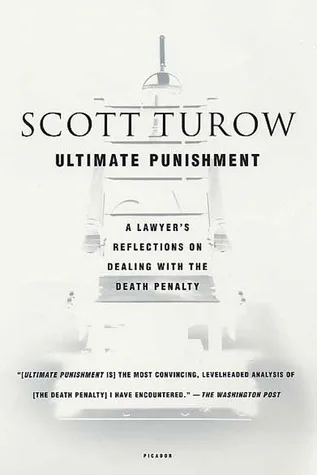
Ultimate Punishment: A Lawyer's Reflections on Dealing with the Death Penalty
Scott Turow examines the moral and practical failures of capital punishment through his experience serving on the Illinois Commission on Capital Punishment. He analyzes the inherent contradictions in a legal system that attempts to achieve perfect justice while relying on fallible human witnesses and forensic evidence. The text details the specific cases of death row inmates who were exonerated by DNA evidence, highlighting the risks of prosecutorial misconduct and racial bias. Turow evaluates the logic of retribution against the reality of state-sanctioned execution, ultimately documenting his shift from a death penalty agnostic to an opponent of the practice.
Legal professionals, sociology students, and policy advocates read this work to understand the administrative flaws in the American judicial process. Readers gain a technical perspective on how the appellate system functions and why safeguards frequently fail to prevent the conviction of the innocent. The book provides a framework for discussing criminal justice reform based on evidence rather than abstract philosophy. It leaves the audience with an understanding of the fiscal and ethical costs of maintaining a death row system that cannot guarantee total accuracy.
- Published
- 2003
- Language
- EN