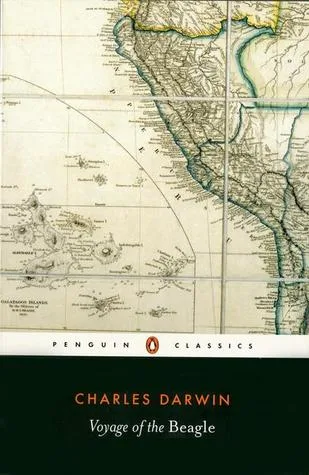
During a five-year naval mission aboard the HMS Beagle, Charles Darwin recorded his observations of the geological formations and biodiversity of South America, the Galapagos Islands, and various Pacific archipelagos. He documents fossilized remains of extinct mammals, the physical variations among mockingbirds and tortoises across different islands, and the volcanic origins of coral reefs. The text details his inland treks across the pampas and the Andes, cataloging thousands of botanical and zoological specimens while noting the distinct behavioral patterns of indigenous peoples and colonial settlers he encountered along the route.
This book serves scientists, naturalists, and historians who study the raw data that preceded the theory of natural selection. Readers gain a detailed perspective on nineteenth-century field methodology and the specific ecological evidence used to challenge fixed views of biological history. For travelers, it provides a rigorous template for observing the physical world through empirical recording. The reader acquires a foundational understanding of how environmental conditions and geographic isolation influence the distribution of life forms across the globe.
- Published
- 1839
- Language
- EN
More by Charles Darwin
See all →

Readers also enjoyed