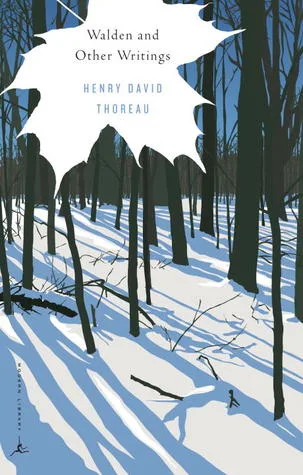
Walden or, Life in the Woods
Henry David Thoreau details his two-year experiment in self-reliance beginning in 1845 on the shores of Walden Pond. He documents the construction of a small cabin, his daily labor in a bean field, and his rejection of material accumulation in favor of subsistence. The text breaks down the specific costs of his survival to argue that industrial society creates unnecessary labor. Use of observation is central, as Thoreau records the seasonal behavior of local wildlife, the fluctuating temperature of the water, and the sounds of the nearby railroad.
This book serves individuals interested in environmentalism and the philosophical application of transcendentalism. Readers use it as a manual for minimalist living and a critique of modern consumer habits. It provides a framework for evaluating personal freedom against economic obligations. Those who finish the text gain a rigorous perspective on how isolation and the direct observation of biological cycles can rewire human attention. It offers a practical demonstration of how reducing physical needs can expand mental clarity.
- Published
- 1854
- Language
- EN
Quotes by Henry David Thoreau
More →I went to the woods because I wished to live deliberately, to front only the essential facts of life.
Walden
Disobedience is the true foundation of liberty. The obedient must be slaves.
Civil Disobedience
The question is not what you look at, but what you see.
Walden

![The United States in Literature [with three long stories] -- Seventh Edition](https://kwbjoqloympvbpzbrfja.supabase.co/storage/v1/object/public/scan-images/catalog/f48162c6-7eb5-41ec-933b-9c4218489c7d-full.webp)