Set against the backdrop of the Napoleonic Wars, this novel tracks the interconnected lives of three aristocratic families: the Rostovs, the Bolkonskys, and the Kuragins. Through the spiritual evolution of Pierre Bezukhov and the military experiences of Prince Andrei, Tolstoy examines the tension between individual action and historical determinism. The narrative shifts from the high-society ballrooms of St. Petersburg to the bloody battlefields of Austerlitz and Borodino. Tolstoy concludes with a philosophical argument asserting that history is driven by the collective movements of the masses rather than the decisions of great men.
History enthusiasts and students of human psychology read this work to understand the civilian and military realities of early nineteenth-century Russia. The reader gains a granular view of how total war affects family dynamics and social status. By following the characters through grief, marriage, and financial ruin, the audience observes a detailed study of mortality and moral growth. One walks away with a specific perspective on how random events and personal choices intersect to shape a person’s character over several decades.
Insights from War and Peace
“While there is life, there is happiness.”
Pierre spends years looking for meaning in grand ideas and secret societies. He only finds peace in a potato shared with a peasant in a dirty prison camp.
“I am not what I was.”
Natasha is so full of life that she almost ruins everything for a momentary thrill. Her mistakes feel so human because she just wants to be loved right now.
“A king is history's slave.”
Napoleon thinks he is moving the world with his genius. Really he is just a tiny leaf being blown around by a massive storm of human choices.
“Everything is, everything exists, only because I love.”
Prince Andrei dies twice. First his pride dies on the battlefield under that vast blue sky. Then his body lets go after he finally learns to forgive.
- Published
- 1869
- Publisher
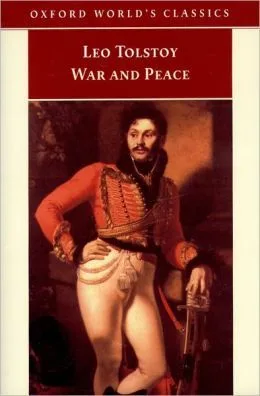
- Oxford University Press
- ISBN
- 9780192833983
- Language
- EN