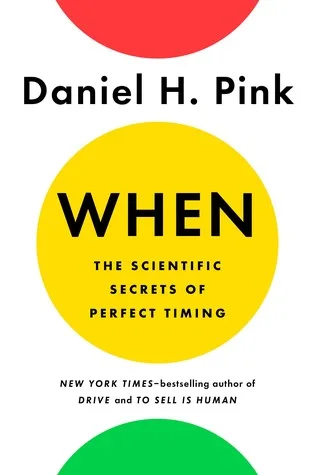
When: The Scientific Secrets of Perfect Timing
Daniel Pink shifts the focus from "how" we work to "when" we work, identifying a universal pattern of peak, trough, and recovery that governs daily performance. He examines the biological reality of chronotypes—categorizing individuals as larks, owls, or third birds—to explain why analytical tasks belong in the morning while creative insights often strike during the afternoon rebound. The text details specific frameworks like the restorative power of "nappuccinos," the importance of temporal landmarks in starting new habits, and the hidden dangers of scheduling medical procedures during the mid-afternoon slump.
This book serves professionals, students, and managers looking to align their schedules with natural circadian rhythms. Readers learn to identify their own internal clocks to avoid making high-stakes decisions during periods of low cognitive alertness. By applying these chronological findings, a person gains a toolkit for structuring their workday, timing exercise for maximum benefit, and understanding why certain group activities require specific rhythmic synchronization. The result is a pragmatic guide to using the clock as a tool for efficiency rather than a source of stress.
Insights from When: The Scientific Secrets of Perfect Timing
“Choral singing is the new yoga.”
Group timing creates a strange sense of belonging. Rowing in a boat or singing in a choir syncs our heart rates and boosts our collective resilience.
“In the afternoon, the negative affect rises and the positive affect declines.”
Most of us experience a predictable mood drop in the afternoon. It explains why hospital errors spike after lunch and test scores dip for students.
“The nap is a Zamboni for the brain.”
Taking a nap between two and four in the afternoon is actually backed by biology. Even a fifteen minute sleep can reset your brain when that mid-day slump hits.
“The most effective breaks are social.”
Lunch is the most important meal for your productivity, not breakfast. Leaving your desk and socializing during that break restores your focus for the late hours.
- Published
- 2018
- Language
- EN
More by Daniel H. Pink
See all →

Readers also enjoyed