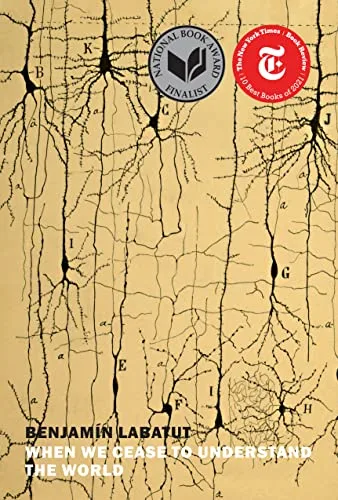
When We Cease to Understand the World
Benjamín Labatut depicts the intersections between scientific discovery and psychological collapse through the lives of Fritz Haber, Alexander Grothendieck, Werner Heisenberg, and Erwin Schrödinger. The narrative tracks how Haber synthesized ammonia for fertilizers while simultaneously developing chlorine gas for chemical warfare. It follows the frantic mathematical breakthroughs of the 20th century, particularly the transition from classical physics to the uncertainty of quantum mechanics. These accounts focus on moments where logic pushes beyond human comprehension, leading to madness, isolation, or the creation of weapons capable of ending the species.
Readers drawn to history and the philosophy of science will find a study of the moral costs associated with extreme intellectual ambition. The book appeals to those interested in how abstract equations translate into physical reality and ecological consequence. A reader finishes these pages with a different perspective on the stability of the natural world, understanding that the pursuit of absolute truth often demands the sacrifice of a scientist’s sanity or the safety of the planet.
Deep; a moderate read.
Best for readers like The Deep Diver. Which reader are you?
- Published
- 2020
- Language
- EN