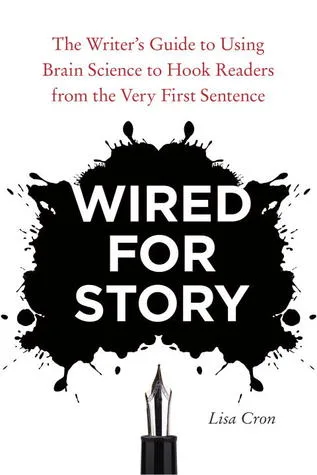
Wired for Story: The Writer's Guide to Using Brain Science to Hook Readers from the Very First Sentence
Lisa Cron argues that the human brain evolved to prioritize story as a survival mechanism for navigating social and physical landscapes. Using findings from cognitive neuroscience, she explains that readers seek specific patterns that trigger dopamine releases, primarily focusing on a character’s internal struggle rather than external plot events. The text introduces the concept of the story question and emphasizes that every sentence must provide necessary information for the protagonist to solve their central problem. Cron details how the brain filters for cause-and-effect relationships and why readers disconnect when a narrative lacks a clear internal logic or emotional stakes.
Fiction writers and screenwriters use this guide to align their storytelling with biological expectations. It appeals to authors who want to move beyond abstract creative advice and instead apply neurological principles to the revision process. Readers learn to identify and remove "filler" scenes that do not advance the protagonist’s arc. By following the provided frameworks, a writer gains the ability to anchor their narrative in the character's perspective, ensuring that each scene forces the reader to wonder what will happen next. The final result is a blueprint for maintaining narrative tension through cognitive engagement.
- Published
- 2012
- Language
- EN