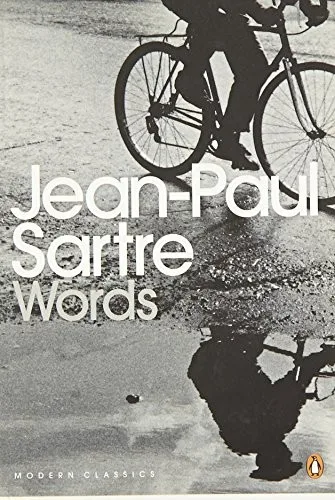
Jean-Paul Sartre’s autobiography dissects his early childhood in a bourgeois household, focusing on his obsession with reading and his eventual turn toward writing. Divided into two sections, Words and Writing, the book analyzes how he used literature to construct a false sense of purpose and escape the physical world. Sartre scrutinizes his young self as a performer, playing the role of a child prodigy to satisfy his grandfather’s expectations. He examines the specific intellectual frameworks of the early twentieth century that shaped his conviction that writers are secular prophets tasked with achieving immortality through their texts.
Readers interested in the intersection of philosophy and memoir study this text to understand the development of existentialist thought. It appeals to those looking for a rigorous critique of the literary life and the vanity of artistic ambition. By the end, the reader sees how Sartre rejects his former idealism, treating his childhood fascination with books as a hollow substitute for authentic living. One gains a clear view of how an influential thinker systematically deconstructs his own mythology to address the reality of human existence without the comfort of intellectual pretension.
- Published
- 1964
- Language
- EN
Quotes by Jean-Paul Sartre
More →Hell is other people.
No Exit
Man is condemned to be free; because once thrown into the world, he is responsible for everything he does.
Being and Nothingness