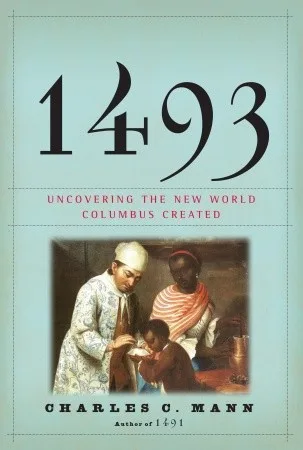
Charles C. Mann explains the development of the Columbian Exchange, a massive biological migration that permanently linked the eastern and western hemispheres. He argues that this ecological collision created the modern global economy by moving plants, animals, and diseases across oceans. The book tracks how the silver trade in Potosi fueled Chinese commerce, how the potato prevented European famines, and how the arrival of malaria-carrying mosquitoes shaped the African slave trade in the Americas. Mann focuses on the Homogenocene, a new era defined by the blurring of planetary ecosystems.
History enthusiasts and science professionals read this book to understand how environmental shifts dictate political and social change. It appeals to those interested in the origins of globalization and the unintended consequences of human migration. Readers gain a clear perspective on how invisible forces like soil fungus and pollinators have redirected the path of empires. By the end, the reader possesses a framework for seeing current economic trends as biological events that began five centuries ago.
Outward-looking; a moderate read.
Best for readers like The Evidence Seeker. Which reader are you?
- Published
- 2011
- Language
- EN
More by Charles C. Mann
See all →
Books like 1493: Uncovering the New World Columbus Created
See all 12 →