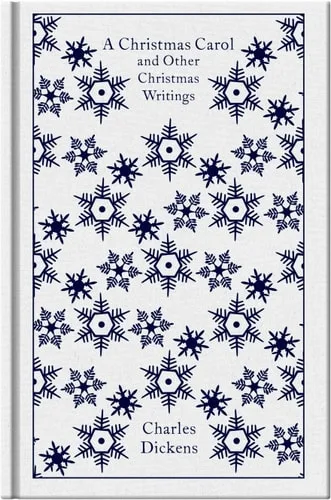
This collection centers on Ebenezer Scrooge, a parsimonious financier in Victorian London who views charity as a waste of resources. On Christmas Eve, the ghost of his former partner, Jacob Marley, warns him of eternal suffering, leading to three subsequent visitations. These spirits force Scrooge to witness his lonely childhood, the current struggles of his clerk Bob Cratchit, and his own unmourned death. Alongside this novella, the volume includes Dickens’s shorter holiday fiction and journalistic essays focusing on social inequity, communal dining, and the plight of the urban poor.
Readers of nineteenth-century literature and fans of Victorian history turn to this edition to understand the cultural construction of the modern holiday. The text appeals to those interested in the mechanics of moral reform and the use of ghost stories as a vehicle for social commentary. A reader finishes this book with a clear view of Dickens’s belief that individual generosity and a commitment to the welfare of others can mitigate the harshness of industrial society.
Insights from A Christmas Carol and Other Christmas Writings
“I will live in the Past, the Present, and the Future!”
Scrooge isn't a monster. He is just a man who forgot how to be part of the world. Seeing his own lonely grave finally broke the spell.
The secondary stories show that Christmas is a mindset. Even people in lighthouses or mines find a way to celebrate. You have no excuse.
“His own heart laughed: and that was quite enough for him.”
Money is only useful if it moves. Sitting on a pile of gold while people starve is a sickness. Scrooge finally found the cure.
“I mean to give him the same chance every year, whether he likes it or not.”
Fred is the unsung hero. He keeps inviting his mean uncle to dinner every single year. That kind of persistence is rare.
- Published
- 2010
- Publisher
- Penguin Publishing Group
- ISBN
- 9780141195858
- Language
- EN
Quotes by Charles Dickens
More →It was the best of times, it was the worst of times, it was the age of wisdom, it was the age of foolishness.
A Tale of Two Cities