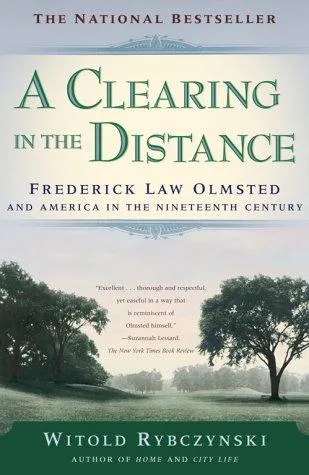
Witold Rybczynski chronicles the life and career of Frederick Law Olmsted, the visionary who defined American landscape architecture during the nineteenth century. The narrative follows Olmsted’s transition from an unsuccessful farmer and travel journalist to the mastermind behind New York City's Central Park. Using archival records and personal correspondence, Rybczynski details the technical challenges of urban park design and the political maneuvering required to realize public spaces. He explains how Olmsted applied radical civic ideals to civil engineering projects like the U.S. Capitol grounds, the Chicago World’s Fair, and the Biltmore Estate.
Readers interested in the history of North American cities and the logistics of large-scale infrastructure find this biography informative. It appeals to students of design who want to understand the aesthetic principles of the pastoral movement and the practical mechanics of historic land conservation. By the end, the reader recognizes how deliberate topographical interventions shaped the physical layout of modern urban centers. The text provides a clear look at how human labor and artistic intent transform raw wilderness into functional public infrastructure.
- Published
- 1999
- Language
- EN