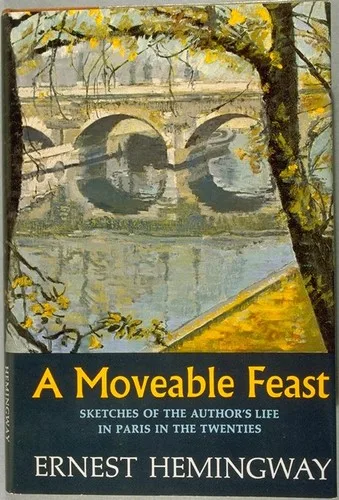
Ernest Hemingway recounts his early years as an aspiring writer living in Paris during the 1920s. He describes a life of disciplined artistic labor fueled by hunger, cheap wine, and the company of fellow expatriates. The narrative documents his interactions with F. Scott Fitzgerald, Gertrude Stein, and Ezra Pound, detailing their creative rivalries and personal eccentricities. Hemingway focuses on specific rituals of his craft, from writing in cafes to betting on horses, while navigating his first marriage to Hadley Richardson amidst a cityscape of legendary bars and bookstores.
Readers interested in the mechanics of prose and the atmosphere of the Lost Generation read this book for its unvarnished portrait of the creative process. It serves as a study in dedication for writers who want to understand the relationship between poverty and artistic output. The reader gains a distinct sense of a historical moment in European culture and a visceral understanding of how physical surroundings and social circles influence the development of a literary voice.
- Published
- 1964
- Language
- EN
Quotes by Ernest Hemingway
More →The world breaks everyone, and afterward, many are strong at the broken places.
A Farewell to Arms
Courage is grace under pressure.
There is nothing noble in being superior to your fellow man; true nobility is being superior to your former self.