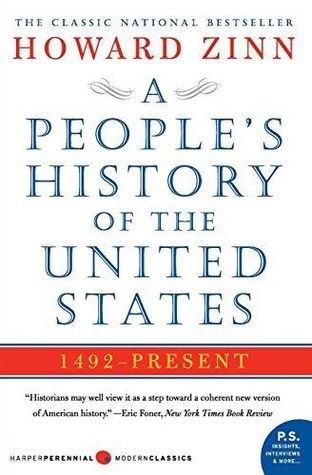
A People’s History of the United States: 1492 - Present
Howard Zinn shifts the historical lens away from presidents, generals, and industrial tycoons to focus on the experiences of marginalized groups. The narrative begins with the Arawak Indians' encounter with Christopher Columbus and spans through the late 20th century. Zinn documents the labor strikes of the industrial era, the resistance of enslaved people, the feminist movement, and the struggles of civil rights activists. He frames American history as a series of class conflicts where the interests of the elite often clash with the needs of the working class and minority populations.
This book serves students and readers seeking an alternative to traditional textbook narratives. It appeals to those interested in grassroots activism and the systemic roots of social inequality. Readers finish the text with a critical perspective on how government policies and economic structures have historically affected the common person. The material provides a foundation for understanding the history of dissent and the role of organized resistance in shaping contemporary American society.
Deep and outward-looking; a moderate read.
Best for readers like The Evidence Seeker. Which reader are you?
Insights from A People’s History of the United States: 1492 - Present
“They would make fine servants. With fifty men we could subjugate them all.”
Columbus was a gold-obsessed killer who tortured the Arawak people. School taught us he was a hero. He was actually a monster.
“The Constitution, then, illustrates the complexity of the American system.”
Rich white guys wrote the Constitution to protect their own property. It was never about liberty for everyone. It was about keeping the poor in line.
“In 1829, Andrew Jackson... had just been elected President. He was a land speculator.”
Jackson forced thousands of Cherokees off their land just for land speculation. The Trail of Tears was state-sponsored theft. He ignored the courts to do it.
“They would make fine servants. With fifty men we could subjugate them all.”
Columbus was not exactly a hero to the Arawak people. He saw them as servants the second he landed. History looks different from the perspective of the galley instead of the deck.
- Published
- 1980
- Language
- EN
Books like A People’s History of the United States: 1492 - Present
See all 12 →