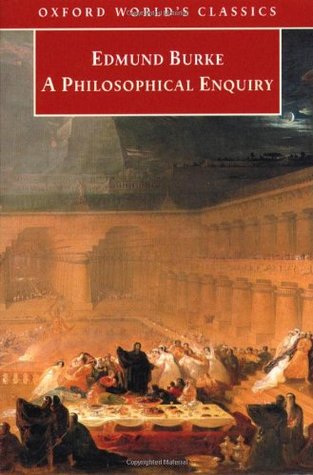
A Philosophical Enquiry into the Origin of Our Ideas of the Sublime and Beautiful
Edmund Burke defines the aesthetic categories of the beautiful and the sublime by tracing their origins to human physiological responses and basic instincts. He argues that beauty arises from pleasure and social affection, characterized by smallness, smoothness, and delicate curvature. In contrast, the sublime stems from the instinct of self-preservation and the sensation of terror. This state is triggered by vastness, obscurity, power, and infinite scale. Burke systematically classifies how sensory inputs like darkness, silence, and intense light produce psychological tension and awe, shifting the focus of aesthetics from the inherent qualities of an object to the emotional experience of the observer.
Art historians and students of the Romantic movement read this text to understand the transition from Neoclassical order to the valuation of raw emotion. It serves as a manual for those interested in the Gothic tradition and the evolution of landscape painting. A reader walks away with a framework for identifying why certain environments evoke comfort while others cause a chilling sense of overwhelm. By following Burke’s logic, the audience learns to distinguish between the charms of the miniature and the overwhelming gravity of the monumental in both nature and creative works.
- Published
- 1757
- Language
- EN