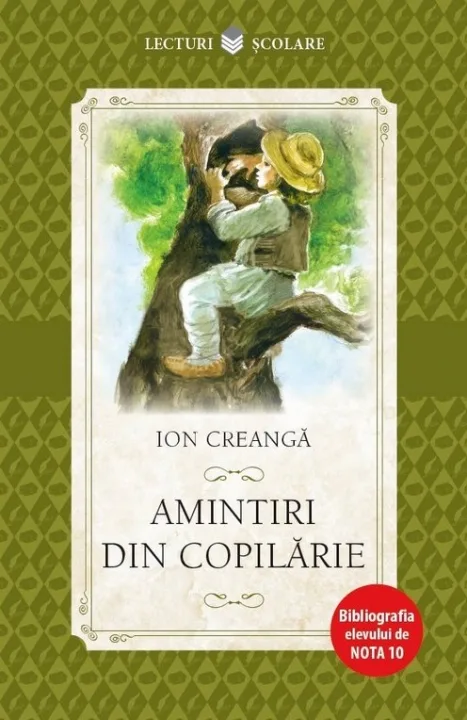
Ion Creanga’s memoir follows Nica, a mischievous boy growing up in the rural village of Humulesti during the mid-nineteenth century. The narrative details specific episodes of village life, including the protagonist stealing cherries from his uncle, fleeing his home to avoid chores, and his reluctance to attend the local school. Creanga uses regional Moldavian dialect to recount the challenges of traditional education, the strict discipline of the church, and the chaotic play involving his siblings and neighbors. These anecdotes document the transition from a carefree rural childhood to the responsibilities of preparing for the priesthood.
This book serves readers interested in the folklore and social structures of historical Romania. Students and enthusiasts of classic literature read it to observe how peasants lived, spoke, and educated their children before modern urbanization. The reader learns the specific linguistic rhythms of the period and gains a detailed understanding of the festivals, superstitions, and family dynamics that defined Balkan village culture. It provides a concrete look at how memory shapes personal identity through the lens of a specific historical landscape.
Insights from Amintiri din Copilărie
School felt like a cage at first. Seeing the Calul Bălan makes you realize how much fear used to be part of learning.
“God forgive me, but I've done it.”
Nica stole those cherries and felt the whole world was watching him. Guilt makes every rustle in the trees sound like a witness.
The way Smaranda kept the house together. She handled the kids and the chores with a quiet, steady strength that felt like home.
Childhood is just a series of narrow escapes. One minute you're swimming in the Ozana, the next you're running from a giant hoopoe bird.
- Published
- 1877
- Language
- RO

![उस रात के बाद [Us Raat Ke Baad]](https://kwbjoqloympvbpzbrfja.supabase.co/storage/v1/object/public/scan-images/catalog/53673b08-18d0-4f03-8e5f-04a98899e36f-full.webp)