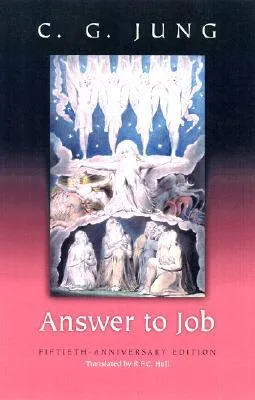
Carl Jung examines the moral conflict within the divine personality by analyzing the biblical Book of Job through a psychological lens. He argues that Yahweh exhibits a lack of self-reflection, tormenting his loyal servant Job to satisfy an arbitrary bet with Satan. Jung interprets this interaction as a moment where a human being achieves a higher ethical consciousness than the deity. This inequality forces a psychological evolution within the God-image, necessitating the incarnation of Christ to reconcile the divine shadow and integrate the destructive and creative aspects of the godhead.
This text attracts readers interested in depth psychology and the history of religious symbols. It appeals to those seeking a rational framework for the existence of evil and the psychological function of religious dogma. Readers finish the book with a perspective on the unconscious as a source of both revelation and terror. They gain a method for viewing ancient scriptures as records of the human psyche attempting to process internal contradictions through the externalization of transcendent figures.
- Published
- 1952
- Language
- EN