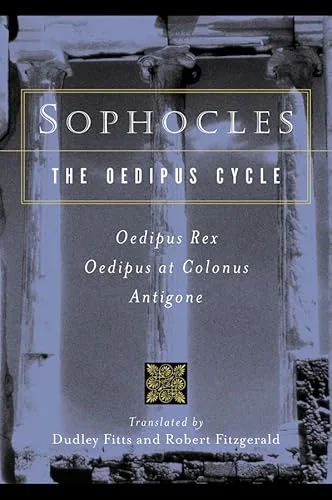
Following the bloody civil war between brothers Eteocles and Polynices, King Creon decrees that the latter, deemed a traitor, must remain unburied under penalty of death. Antigone defies this state law to perform funeral rites for her brother, prioritizing divine command and kinship over civil loyalty. The drama centers on the resulting collision between Creon’s rigid political authority and Antigone’s individual conscience. As the king enforces his sentence, he triggers a sequence of familial suicides that destroy his household and challenge the stability of his rule.
Students of political philosophy and classical literature read this play to analyze the tension between secular legislation and religious conviction. Readers gain a framework for evaluating the limits of state power and the consequences of legal inflexibility. The text provides a case study in how personal integrity interacts with public responsibility. Individuals finish the work with a clearer understanding of the tragic intersection where private grief meets the absolute demands of a governing regime.
- Published
- 1581
- Language
- EN



![उस रात के बाद [Us Raat Ke Baad]](https://kwbjoqloympvbpzbrfja.supabase.co/storage/v1/object/public/scan-images/catalog/53673b08-18d0-4f03-8e5f-04a98899e36f-full.webp)