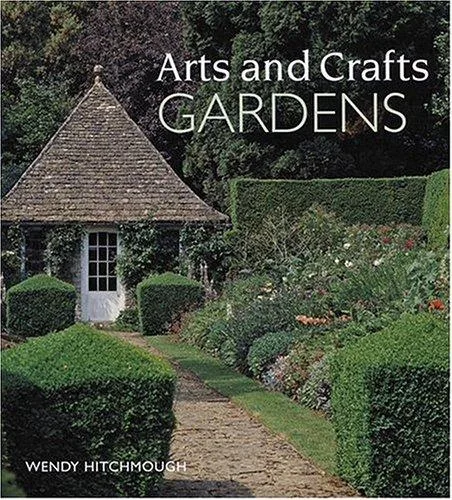
Wendy Hitchmough examines the structural and aesthetic integration of the English country house with its immediate environment during the late nineteenth and early twentieth centuries. The text documents how architects like Edwin Lutyens and designers such as Gertrude Jekyll replaced Victorian formal bedding with architectural "rooms" defined by yew hedges, stone walling, and textured terraces. Hitchmough details specific site plans, planting schemes, and the use of local masonry to illustrate the movement’s rejection of industrial manufacturing in favor of handcrafted, regional vernacular details that harmonized interior living spaces with outdoor enclosures.
Architectural historians and garden designers use this book to study the practical application of Arts and Crafts principles to landscape topography. Preservationists look to these pages for historical accuracy regarding pergolas, sunken gardens, and herbaceous borders when restoring period properties. By studying the featured archival photographs and technical diagrams, readers gain a technical understanding of how to balance rigid spatial geometry with soft, voluminous planting to achieve a cohesive domestic landscape.
- Published
- 1997
- Language
- EN