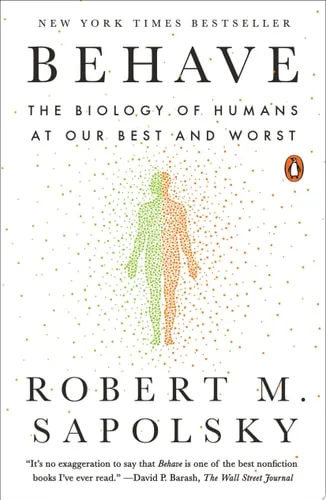
Behave: The Biology of Humans at Our Best and Worst
Robert Sapolsky chronologically charts the biological triggers of human behavior, starting with the neurobiology of the amygdala and frontal cortex seconds before an act. He expands the timeline back to hormonal surges in the hours prior, adolescent brain development, and fetal environments. The narrative moves into genetics and ancient evolutionary pressures that hardwired the human capacity for tribalism and altruism. By examining the chemical signals behind aggression and cooperation, he explains how context dictates whether a person pulls a trigger or offers a helping hand.
This book serves researchers and students of neurobiology and sociology who want to move beyond single-cause explanations for human conduct. Readers finish the text with a technical vocabulary for discussing how stress hormones and cultural inheritance interact to influence moral decision-making. It provides a framework for understanding the limitations of free will and the biological mechanisms that drive social hierarchies. Those interested in the intersection of criminal justice and science use these findings to reconsider how society assigns blame and merit.
Insights from Behave: The Biology of Humans at Our Best and Worst
Adolescence is just a brain with a hot engine and no brakes. The frontal cortex isn't finished yet. We shouldn't judge kids like they're tiny adults.
“The brain often has trouble distinguishing between being metaphorically and literally disgusted.”
Metaphors control our morality. If you feel physically grossed out, you'll judge someone's lifestyle way more harshly.
“It’s not that the heart is a lonely hunter. It’s that the frontal cortex is a tired marathoner.”
Context is everything for a neuron. The same chemical can make you a saint or a jerk depending on the room.
“Free will is what we call the biology that hasn't been discovered yet.”
Your brain decides to act before you even know it. Your conscious mind is just a press secretary making up excuses later.
- Published
- 2018
- Publisher
- Penguin
- ISBN
- 9780143110910
- Language
- EN