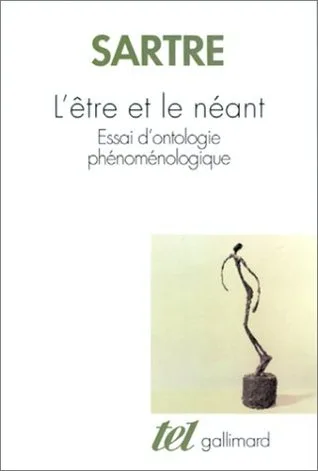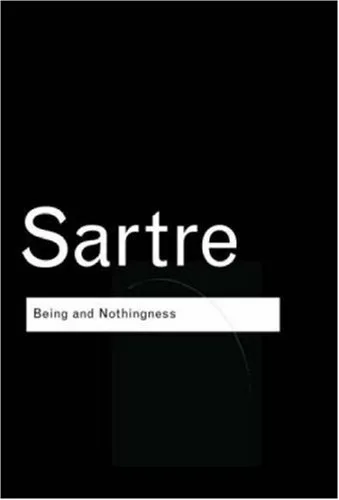
Jean-Paul Sartre argues that human existence is defined by a fundamental gap between the conscious self, or being-for-itself, and the inert world of objects, known as being-in-itself. He posits that because consciousness is not a fixed substance but a constant process of negation, individuals are condemned to absolute freedom. The text analyzes how people attempt to escape this terrifying autonomy through bad faith, pretending they are defined by social roles or biological necessity like inanimate objects. Sartre uses phenomenological descriptions of the gaze, bodily awareness, and the feeling of nausea to demonstrate that existence precedes essence, meaning humans have no pre-determined purpose and must create their own values through action.
This philosophical treatise serves students of existentialism and phenomenology who seek a rigorous framework for personal agency. Readers engage with these dense arguments to understand the mechanics of choice and the psychological burden of responsibility. The audience walks away with a vocabulary for identifying self-deception and an understanding of how the presence of others affects individual identity. By finishing the work, a reader gains a systematic method for viewing the self as a project defined by future possibilities rather than past facts.
- Published
- 1943
- Language
- EN
Quotes by Jean-Paul Sartre
More →Hell is other people.
No Exit
Man is condemned to be free; because once thrown into the world, he is responsible for everything he does.
Being and Nothingness