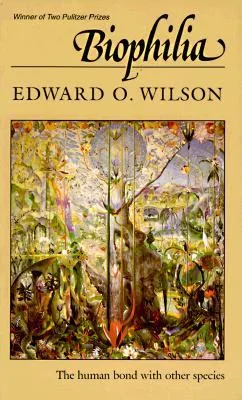
Edward O. Wilson introduces the hypothesis that humans possess an innate, genetically based tendency to seek connections with other forms of life. He analyzes the biological roots of human interest in the natural world, linking our evolutionary history to our psychological and aesthetic preferences. This argument draws on specific observations of social insects, the complex ecosystems of tropical rainforests, and the human inclination toward habitats that resemble the African savanna. Wilson suggests that our mental health and survival depend on maintaining these deep ancestral ties to biological diversity.
Naturalists, environmentalists, and students of evolutionary biology read this work to understand the psychological dimensions of conservation. It appeals to those looking for a scientific basis for environmental ethics that goes beyond economic utility. Readers finish the book with a framework for viewing human nature as inseparable from the biosphere. They gain a perspective that treats the preservation of species as a requirement for psychological wholeness, shifting the focus from mere stewardship to a fundamental biological necessity for the human species.
- Published
- 1984
- Language
- EN