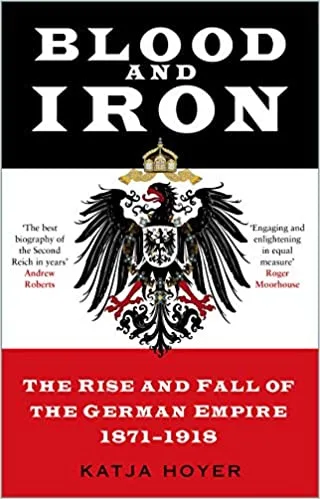
Katja Hoyer tracks the trajectory of the German Empire from its unification under Otto von Bismarck to its collapse following World War I. She argues that the Second Reich was not a direct predecessor to Nazism, but a distinct period of rapid industrialization and social tension. The narrative centers on the friction between Bismarck’s pragmatic "blood and iron" diplomacy and the erratic personal rule of Kaiser Wilhelm II. By examining internal political struggles and the pressure of competing European empires, Hoyer details how a brand-new nation sought stability while fueling nationalist fervor.
Students of European history and readers interested in the origins of the twentieth century will find this a useful resource. It provides a concise alternative to longer academic volumes by focusing on the political architecture of the German state. Readers walk away with a clear understanding of how the empire balanced democratic impulses with authoritarian structures. The text clarifies why a country that led the world in science and culture simultaneously built the military framework that eventually led to its own destruction in 1918.
- Published
- 2021
- Language
- EN
More by Katja Hoyer
See all →

Readers also enjoyed