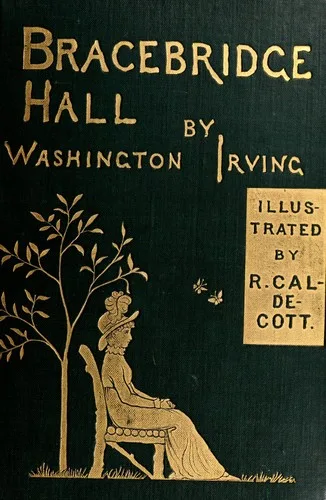
Bracebridge Hall functions as a series of character sketches and observational essays centered on an idealized English country estate. Following the narrator Geoffrey Crayon, the text documents the eccentricities of the Squire, a man obsessed with reviving feudal customs and traditional pastimes. The narrative consists of loosely connected vignettes regarding rural life, including descriptions of falconry, village weddings, and local ghost stories. Irving cataloged specific British archetypes such as the retired soldier and the scholarly parson while contrasting the stability of old European traditions with the rapid shifts of the nineteenth century.
Readers who enjoy social history and atmospheric travel writing value this book for its detailed portrait of a disappearing way of life. It appeals to those interested in the transition between the Georgian and Victorian eras or the development of the American short story. The reader gains a clear understanding of early nineteenth-century pastimes and the deliberate construction of national identity through folklore. The book provides a technical look at how a narrator observes a foreign culture, offering a template for descriptive prose and character development.
- Published
- 1800
- Language
- EN
![The United States in Literature [with three long stories] -- Seventh Edition](https://kwbjoqloympvbpzbrfja.supabase.co/storage/v1/object/public/scan-images/catalog/f48162c6-7eb5-41ec-933b-9c4218489c7d-full.webp)