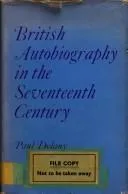
British autobiography in the seventeenth century
Paul Delany examines the emergence of self-narrative in Britain between the late Renaissance and the Restoration. He categorizes texts into two primary streams: the religious confessions of Puritans and Quakers, and the secular memoirs written by members of the upper class. The book argues that shifting social structures and the rise of individualism allowed writers to move beyond simple chronicles of events. Delany focuses on how domestic life, military duty, and spiritual crises were first documented to construct a coherent personal identity.
Scholars of seventeenth-century literature and researchers of historiography read this work to understand the origins of life-writing as a distinct genre. The text provides a framework for identifying the differences between public political records and private emotional accounts. Readers gain a clear taxonomy of early autobiographical forms and an understanding of how religious fervor and social status dictated the way early modern subjects perceived their own lives. This study bridges the gap between historical documentation and the development of the modern novel.
- Published
- 1969
- Language
- EN