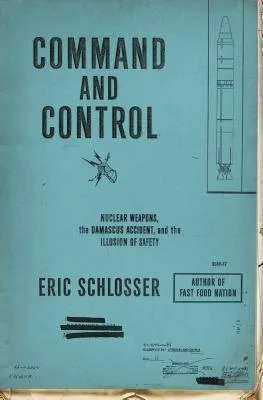
Command and Control: Nuclear Weapons, the Damascus Accident, and the Illusion of Safety
Eric Schlosser reconstructs the 1980 Damascus accident, where a dropped socket punctured a Titan II missile’s fuel tank and caused a massive explosion at a rural Arkansas silo. He weaves this minute-by-minute account into a broader technical history of the American nuclear enterprise. The narrative examines how fallible human operators interact with aging hardware, documenting decades of near-misses, dropped bombs, and accidental detonations. Schlosser argues that complex technological systems inevitably fail and that the United States avoided a domestic nuclear detonation through luck rather than perfect engineering or management.
This history serves readers interested in systems engineering, Cold War bureaucracy, and public policy. It appeals to those who study the intersection of military strategy and mechanical reliability. Readers gain a detailed understanding of how institutional secrecy hides systemic fragility and why centralized control over nuclear stockpiles is often a precarious fiction. The book provides a sobering framework for evaluating the inherent risks of maintaining a nuclear arsenal, moving the reader away from abstract deterrence theory toward an appreciation for the physical volatility of the weapons themselves.
Outward-looking; a moderate read.
Best for readers like The Evidence Seeker. Which reader are you?
- Published
- 2013
- Language
- EN
More by Eric Schlosser
See all →

Books like Command and Control: Nuclear Weapons, the Damascus Accident, and the Illusion of Safety
See all 12 →