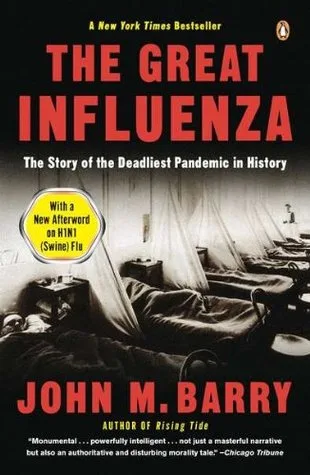
The Great Influenza: The Story of the Deadliest Pandemic in History
John M. Barry details the 1918 influenza pandemic, focusing on the collision between a lethal H1N1 virus and a nascent American medical infrastructure. He chronicles the evolution of modern medical education, specifically the rise of institutions like Johns Hopkins, and follows researchers such as William Welch and Oswald Avery as they struggled to identify the pathogen. The narrative tracks how the virus mutated as it moved through military camps and urban centers, exacerbated by wartime censorship and public officials who suppressed truth to maintain morale. Barry concludes that the failure of leadership to communicate honestly caused a societal collapse more damaging than the biological threat itself.
Readers interested in the intersection of public health policy and historical crisis will find this a technical analysis of how science functions under pressure. It appeals to those seeking a scientific explanation of viral pathology alongside a study of political ethics. The reader gains an understanding of the mechanics of genetic drift and shift, the history of vaccine development, and the logistical challenges of managing a national health emergency. It serves as a blueprint for the structural and psychological requirements of pandemic preparedness.
Outward-looking; a moderate read.
Best for readers like The Evidence Seeker. Which reader are you?
- Published
- 2004
- Language
- EN
More by John M. Barry
See all →
Books like The Great Influenza: The Story of the Deadliest Pandemic in History
See all 12 →