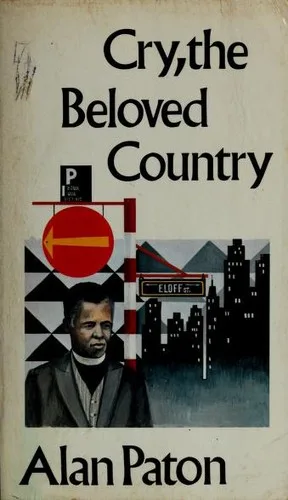
Stephen Kumalo, a Zulu pastor from the rural village of Ndotsheni, travels to Johannesburg to find his sister and his missing son, Absalom. Upon arrival, he discovers a fractured society where racial segregation and economic inequality have driven young people from tribal lands into urban slums and crime. Kumalo eventually finds Absalom in prison, charged with murdering Arthur Jarvis, a white activist for racial justice. The narrative contrasts the quiet dignity of the countryside with the chaotic corruption of the city, illustrating how the destruction of tribal structures creates social instability.
Readers interested in the historical sociology of pre-Apartheid South Africa choose this book for its specific portrayal of land displacement and racial tension. It attracts those studying the intersection of Christian theology and social justice, as the story concludes with an unlikely bond between Kumalo and the victim’s father, James Jarvis. The reader gains a clear understanding of the legislative and economic forces that dismantled indigenous family units. By the end, one walks away with a stark view of how institutionalized inequality generates a cycle of fear and violence that affects both the oppressed and the oppressor.
Deep, inward-looking, contemplative and thought-provoking; a moderate read.
Best for readers like The Wisdom Collector. Which reader are you?
- Published
- 1940
- Language
- EN