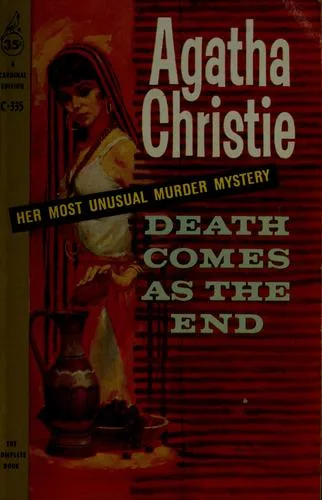
Set in ancient Egypt in 2000 B.C., the narrative follows Renisenb after she returns to her father’s estate on the banks of the Nile. Her father, a mortuary priest named Imhotep, disrupts the family dynamic when he brings home a young, arrogant concubine named Nofret. Her presence ignites jealousy among Imhotep’s sons and their wives, leading to a series of sudden deaths. As the household succumbs to fear and suspicion, Renisenb must identify the killer among her own relatives before the family is destroyed.
Fans of historical fiction and traditional whodunits read this volume to see the mystery genre applied to a non-modern setting. Readers gain an understanding of how social hierarchies and religious superstitions functioned in the Middle Kingdom. The book provides a look at human motives like greed and spite, demonstrating that psychological impulses remain consistent regardless of the era. The audience finishes the story with a solved puzzle rooted in specific archaeological details.
Clear-cut and escapist; an easy read.
Best for readers like The Curious Generalist. Which reader are you?
Insights from Death Comes as the End
“It is not the dead who matter. It is the living.”
Renisenb returns home and finds her family falling apart over a new concubine. It shows how one outsider can trigger every hidden resentment in a house.
Imhotep thinks his authority keeps the family safe. He is actually just blind to the bitterness growing right under his nose.
“Death comes as the end.”
The deaths start to feel like a natural disaster. Nobody knows who to trust when the person killing you shares your dinner table.
Grief can make people cruel or it can make them honest. Renisenb has to choose between her family's lies and her own survival.
- Published
- 1944
- Publisher
- St. Martin's Paperbacks
- ISBN
- 9780312981617
- Language
- EN