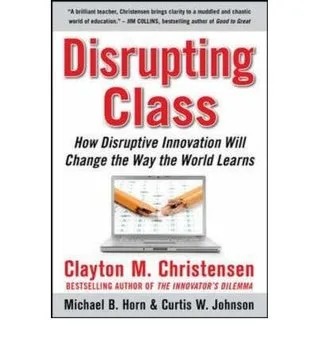
Disrupting Class: How Disruptive Innovation Will Change the Way the World Learns
Clayton M. Christensen applies the theory of disruptive innovation to the American public school system, arguing that the traditional classroom model is structurally unable to accommodate diverse learning styles. The book explains how monolithic instruction fails because it targets a nonexistent average student. Christensen, Horn, and Johnson propose that computer-based modularity will eventually replace centralized teaching by allowing for individualized pacing and customized content delivery. They trace the shift from integrated school structures to student-centric networks where software enables a "jobs-to-be-done" approach to education that addresses specific student motivations.
Educators, policy makers, and technology developers read this book to understand the economic and structural forces shaping future school reforms. It provides a framework for identifying why previous technological investments failed to yield significant test score improvements. Readers gain a vocabulary for predicting how emerging digital platforms will compete with established institutions. The text offers a strategic roadmap for implementing blended learning models and managing the transition from standardized curricula to personalized instruction pathways within existing budgetary constraints.
- Published
- 2008
- Language
- EN
More by Clayton M. Christensen
See all →