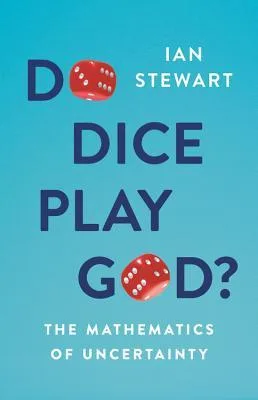
Do Dice Play God?: The Mathematics of Uncertainty
In this work, Ian Stewart traces the history of human attempts to quantify and manage the unknown. He identifies six distinct stages of uncertainty, moving from the origins of probability in gambling to the complex algorithms used in modern finance. The narrative explains technical concepts such as Bayesian inference, the bell curve, and chaos theory, while illustrating how mathematical models address unpredictable systems like global weather patterns, earthquakes, and quantum mechanics. Stewart examines the disconnect between rigid mathematical laws and the messy randomness of reality, showing how mathematicians frame risk in a world that resists total certainty.
Students of mathematics and fans of popular science read this book to understand the mechanics behind professional risk assessment. It appeals to those curious about why weather forecasts fail or how insurance companies calculate premiums. Readers gain a functional vocabulary for discussing luck, chance, and statistics without needing a background in graduate-level calculus. By the final chapter, a reader possesses a clearer framework for distinguishing between genuine randomness and structured patterns, facilitating more rational decision-making in personal and professional contexts involving high stakes.
- Language
- EN