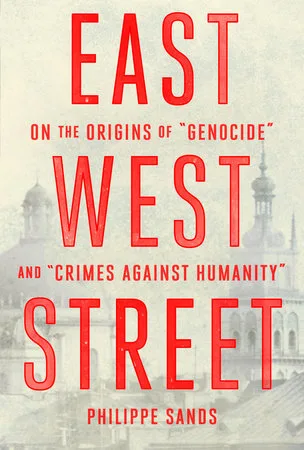
East West Street: On the Origins of "Genocide" and "Crimes Against Humanity"
Philippe Sands tracks the intersection of international law and personal history by tracing the lives of four men linked to the city of Lviv. The narrative follows Hersch Lauterpacht and Rafael Lemkin, the legal theorists who developed the distinct concepts of crimes against humanity and genocide. Sands details their separate paths as they integrated these frameworks into the Nuremberg trials. Simultaneously, he investigates his own grandfather’s survival and the administrative career of Hans Frank, the Nazi Governor General of Poland responsible for the deaths of their families.
Historians and legal scholars read this data-driven account to understand the specific intellectual origins of modern human rights law. The text explains the tension between protecting individuals versus protecting groups, a distinction that still dictates how international courts prosecute mass atrocities. Readers gain a granular view of how personal loss informs legal philosophy, walking away with a precise understanding of the legal landscape established in 1945. It provides a factual map of how ancestral trauma and archival research uncover the mechanics of historical justice.
- Published
- 2016
- Language
- EN
More by Philippe Sands
See all →
Readers also enjoyed