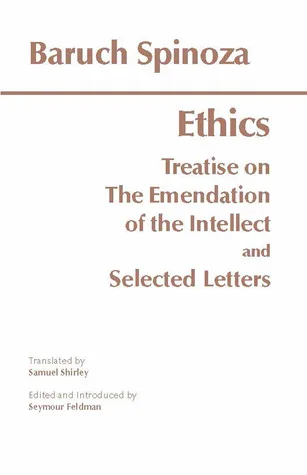
Spinoza’s posthumous masterpiece rejects the idea of a personal, providential deity, instead identifying God with the totality of nature through the doctrine of Deus sive Natura. Utilizing a geometric method modeled after Euclid’s Elements, the text progresses from foundational axioms to specific propositions regarding the human mind and emotions. Spinoza argues that the universe consists of a single substance with infinite attributes, primarily thought and extension. Human behavior is governed by the conatus, an innate drive to persist and increase one's power of acting, while freedom consists in understanding the causal necessity of all events.
Students of philosophy and rationalism read this work to understand the mechanical laws governing human desire and cognition. The book appeals to those seeking a secular framework for morality rooted in logic rather than divine command. Readers move beyond passive emotions like fear or hate by viewing the world from the perspective of eternity. The final chapters provide a blueprint for achieving intellectual contentment and mental autonomy by replacing inadequate ideas with a clear comprehension of how the self fits into the physical and logical order of nature.
- Published
- 1677
- Language
- EN