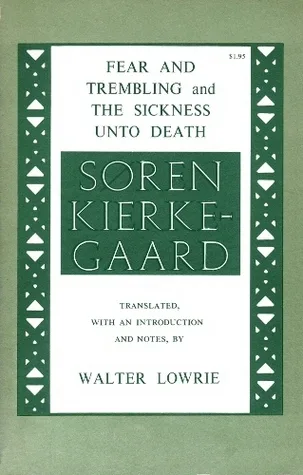
Søren Kierkegaard, writing under the pseudonym Johannes de Silentio, examines the psychological state of Abraham during the biblical command to sacrifice his son, Isaac. The text centers on the Teleological Suspension of the Ethical, a framework where a divine command overrides universal moral laws. Kierkegaard contrasts the Tragic Hero, who suffers for a socially understandable cause, with the Knight of Faith, who acts on a private relationship with God that defies human logic. He focuses on the internal tension of double movement, where an individual gives something up entirely while simultaneously believing they will receive it back in the physical world.
Students of existentialism and philosophy of religion read this text to understand the limits of rational morality and the nature of subjective conviction. The work provides a rigorous analysis of anxiety and the isolation inherent in individual choice. A reader finishes the book with a technical vocabulary for discussing religious paradoxes and an understanding of the Knight of Faith as a figure who operates outside the boundaries of communal ethical systems. It serves as a study of how extreme belief functions when distanced from external justification or social validation.
- Published
- 1843
- Language
- EN