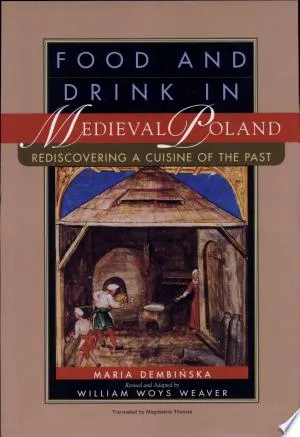
Maria Dembinska provides a technical reconstruction of dietary patterns in Poland from the ninth through the fourteenth centuries. The work categorizes the consumption habits of diverse social tiers, including the royal court, monastic orders, and the peasantry. Using archaeological data and administrative records, the study identifies the shift from millet to wheat and rye, the role of forest foraging, and the heavy reliance on legumes and smoked meats. Dembinska details the specific preparation methods for pottages and the fermentation processes used for honey-based beverages and early beers, while documenting how ecological constraints and the adoption of Christianity dictated seasonal fasting rituals.
Historians and culinary researchers use this text to understand the material reality of Eastern European subsistence before the introduction of New World crops. Readers gain a clear understanding of the calorie sources and nutritional limitations that defined everyday life for various social classes. The book provides specific data on food preservation and trade routes, making it a reference for those studying historical agriculture or social stratification. You walk away with a precise map of the medieval landscape as seen through the production and distribution of sustenance.
Outward-looking; a moderate read.
Best for readers like The Evidence Seeker. Which reader are you?
- Published
- 1999
- Publisher
- University of Pennsylvania Press
- ISBN
- 9780812232240
- Language
- EN