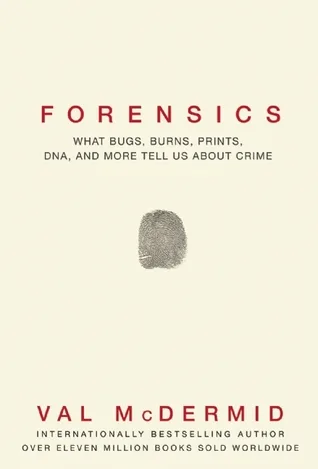
Forensics: What Bugs, Burns, Prints, DNA and More Tell Us About Crime
In this survey of criminal investigation, Val McDermid traces the evolution of forensic science from its early pioneers to contemporary laboratory techniques. Each chapter focuses on a specific methodology used to reconstruct events at a crime scene, covering entomology, toxicology, anthropometry, and blood spatter analysis. She examines how blowflies indicate time of death, how fire investigators distinguish between arson and accidental electrical faults, and the historical shift from basic fingerprinting to the complexities of DNA profiling. Using real-world cases, the text explains the mechanics of facial reconstruction and the botanical clues found in soil samples that link suspects to specific geographic locations.
This book is intended for readers who want to understand the technical reality behind police procedurals. It serves those interested in the chemistry and biology of death, providing a clear look at how experts interpret physical remnants to testify in court. Readers gain a functional knowledge of how evidence is collected, preserved, and analyzed to build a legal case. The book moves past television fiction to show the meticulous, often slow work required to turn biological traces into a coherent narrative of what occurred during a crime.
Outward-looking and clear-cut; a moderate read.
Best for readers like The Evidence Seeker. Which reader are you?
- Published
- 2014
- Language
- EN
More by Val McDermid
See all →

Books like Forensics: What Bugs, Burns, Prints, DNA and More Tell Us About Crime
See all 12 →