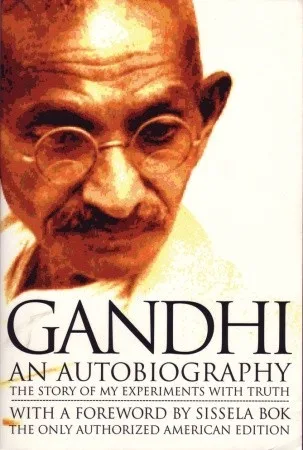
In this memoir, Mohandas K. Gandhi documents his pursuit of spiritual and political integrity through the practice of Satyagraha, or non-violent resistance. He details his upbringing in Gujarat, his legal education in London, and his formative years in South Africa where he first challenged institutionalized racism. The narrative focuses on his specific dietary experiments, his vow of celibacy, and his consistent application of Ahimsa to public protest. He examines his internal struggles with ego and religious identity while organizing labor strikes and civil disobedience against British colonial rule.
Historians and students of political philosophy read this account to understand the mechanics of mass mobilization and the ethics of non-violent conflict. The text provides a record of how personal discipline informs public leadership. Readers observe the intersection of private conscience and social reform, gaining a technical perspective on how Gandhi fused traditional Indian values with modern legal systems. They walk away with a practical framework for civil resistance and a clear view of the vulnerabilities and moral requirements involved in seeking political change.
Inward-looking and contemplative; a moderate read.
Best for readers like The Empathetic Explorer. Which reader are you?
- Published
- 1927
- Language
- EN
Quotes by Mahatma Gandhi
More →The best way to find yourself is to lose yourself in the service of others.
Be the change that you wish to see in the world.
An eye for an eye only ends up making the whole world blind.