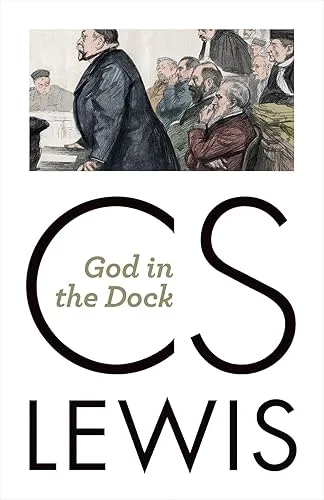
This posthumous collection brings together dozens of essays, letters, and speeches addressing the intersection of Christian dogma and modern secularism. Lewis centers the title piece on the shift in human perspective where man no longer stands before God as a sinner but instead places God on trial as a defendant. The text covers specific topics including the validity of miracles, the ethical implications of capital punishment, and the distinction between the "humanitarian" and "retributive" theories of criminal justice. He examines technical theological matters like the efficacy of prayer alongside cultural critiques regarding the use of language in liturgy.
Readers interested in applied logic and traditional Anglican theology study this volume to see how complex moral frameworks function within everyday public discourse. It appeals to those who want to understand the intellectual defense of supernaturalism in an age of scientific materialism. One gains a vocabulary for discussing the relationship between myth and fact, as well as a series of arguments for the existence of objective moral law. The book leaves the reader with a clearer method for identifying logical fallacies in modern ethical debates.
Deep, inward-looking and contemplative; a moderate read.
Best for readers like The Mindful Reader. Which reader are you?
- Published
- 1971
- Language
- EN