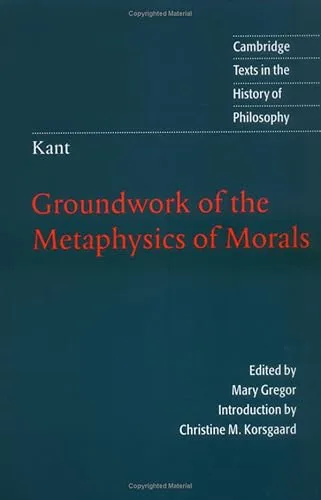
Immanuel Kant establishes a foundation for ethics derived entirely from rational thought rather than empirical observation or religious dogma. He introduces the Categorical Imperative as the supreme principle of morality, commanding individuals to act only on rules they would want to become universal laws. The text contrasts the "hypothetical imperative," which serves specific desires, with the duty-bound "categorical imperative," which applies to all rational beings. Kant argues that human dignity stems from autonomy, meaning individuals possess the capacity to govern themselves through objective moral laws rather than biological instincts.
Students of philosophy and ethics read this text to understand the deontological framework, which prioritizes duty over the consequences of actions. The book serves as a rigorous exercise in deductive reasoning for those seeking a secular, universal basis for right and wrong. Readers walk away with a tool for evaluating the morality of their intentions by testing whether their private motivations can withstand the scrutiny of universal consistency. This work provides the vocabulary for modern discussions on human rights and the intrinsic value of the individual.
- Published
- 1785
- Language
- EN
Quotes by Immanuel Kant
More →Two things fill the mind with ever new and increasing admiration and awe: the starry heavens above me and the moral law within me.
Critique of Practical Reason
Dare to know! Have the courage to use your own understanding.
What is Enlightenment?
Science is organized knowledge. Wisdom is organized life.