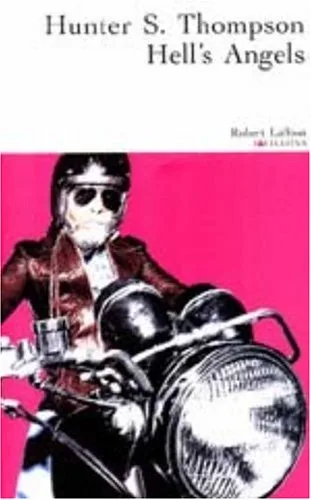
Hunter S. Thompson spent a year embedded with the San Francisco and Oakland chapters of the Hell’s Angels motorcycle club to document their daily lives. He rejects the media-driven caricature of the outlaw biker, instead presenting a sociological study of working-class men who feel discarded by post-war economic progress. The narrative details the club’s internal hierarchy, the mechanics of their runs, and their frequent violent encounters with police and civilians. Thompson analyzes how the press and law enforcement created a feedback loop of fear that actually increased the group’s notoriety and recruitment.
Students of political sociology and immersion journalism read this book to understand the origins of the American counterculture and the mechanics of media-induced moral panics. The text provides a technical look at how subcultures form as a defensive reaction to social isolation. Readers walk away with a clear understanding of the tension between 1960s fringe groups and the mainstream middle class. It serves as a record of the specific moment when motorcycle clubs transitioned from local nuisances into a national symbol of lawlessness.
Outward-looking; a moderate read.
Best for readers like The Evidence Seeker. Which reader are you?
- Published
- 1966
- Language
- EN
Quotes by Hunter S. Thompson
More →A man who procrastinates in his choosing will inevitably have his choice made for him by circumstance.
The Proud Highway
More by Hunter S. Thompson
See all →