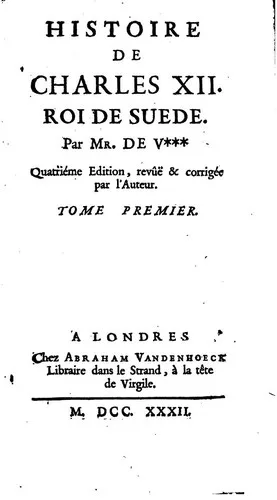
Voltaire chronicles the meteoric rise and eventual downfall of the Swedish monarch Charles XII during the Great Northern War. He details the king’s military campaigns across Europe, focusing on his victory at Narva and his total defeat by Peter the Great at Poltava. The narrative examines Charles as a paradox of stoic asceticism and reckless ambition, contrasting his personal discipline with his strategic stubbornness. By tracing his exile in the Ottoman Empire and his final trek back to Scandinavia, the text documents how a single leader’s obsession with glory can deplete a nation’s resources.
Historians and students of political philosophy study this biography to understand the transition from classical heroism to modern statecraft. It serves as a case study for those analyzing the limitations of absolute monarchy and the high human cost of perpetual warfare. Readers gain a clear perspective on the geopolitical shifts in eighteenth-century Eastern Europe and the specific character flaws that lead to strategic failure. The account provides a cautionary look at how inflexible willpower often results in political ruin rather than lasting stability.
Outward-looking; a moderate read.
Best for readers like The Evidence Seeker. Which reader are you?
- Published
- 1731
- Language
- EN
Quotes by Voltaire
More →Judge a man by his questions rather than by his answers.
Common sense is not so common.
Dictionnaire Philosophique