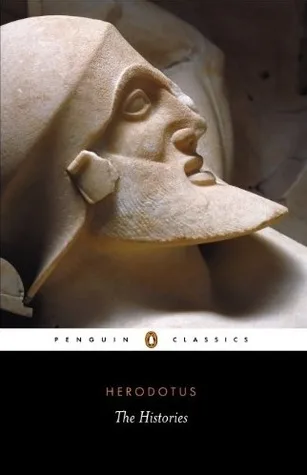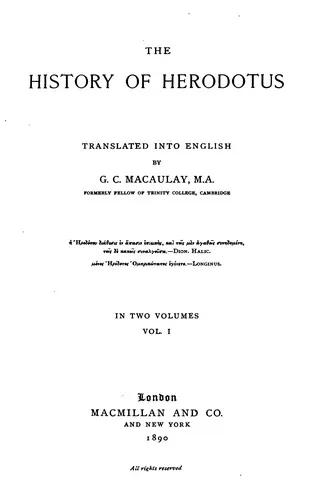
Herodotus chronicles the rise of the Persian Empire and its eventual collision with the Greek city-states. The narrative tracks the expansionist policies of kings Cyrus, Darius, and Xerxes as they absorb Lydia, Egypt, and Babylon before attempting to conquer Athens and Sparta. The text categorizes the customs of different ethnic groups, describing Scythian burial rites, Egyptian mummification, and the geography of the Nile. Through these observations, the author argues that human prosperity is unstable and that hubris leads to the collapse of great empires.
This volume serves historians and students of classical literature who seek the foundational methodologies of Western inquiry. Readers gain a detailed map of the ancient Mediterranean and an understanding of how oral traditions were first organized into a linear prose record. They walk away with a specific framework for analyzing the causes of war and the influence of cultural identity on political conflict. Owners of this 1494 edition typically value the intersection of Renaissance typography and the preservation of early Greek intellectual thought.
Deep and outward-looking; a moderate read.
Best for readers like The Systems Thinker. Which reader are you?
- Published
- 1494
- Language
- EN