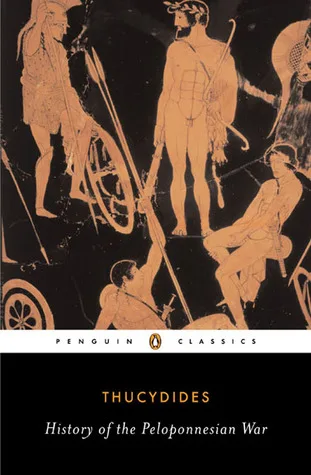
Thucydides recounts the twenty-seven-year conflict between the Athenian empire and the Peloponnesian League led by Sparta. He focuses on the mechanics of political realism and the pursuit of hegemony. The narrative documents specific military campaigns, the plague in Athens, and the disastrous Sicilian Expedition. Through reconstructed speeches like the Periclean funeral oration and the Melian Dialogue, the author examines the tension between moral justification and the exercise of raw power. He argues that human nature remains constant, causing historical patterns to repeat under similar conditions.
This text serves students of international relations and military strategy who seek to understand the logic of state behavior. Readers analyze the Thucydides Trap, where a rising power creates fear in an established power, making war inevitable. It provides a technical look at how democracies and oligarchies manage long-term attrition. The reader gains a framework for evaluating the causes of systemic instability and the ways in which rhetoric influences public policy during ethical and strategic crises.
Insights from History of the Peloponnesian War
“My work is not a piece of writing designed to meet the taste of an immediate public, but was done to last for ever.”
History tends to repeat itself because human nature doesn't change much. We still fall for the same pride and the same fears. These ancient battles feel like they happened last week.
“The growth of the power of Athens, and the alarm which this inspired in Lacedaemon, made war inevitable.”
Athenian leaders started justifying every bad move by saying they had to stay strong. They became terrified of looking weak to their allies. Power turned into a trap they couldn't escape.
“As for the gods, it seemed to be the same thing whether one worshipped them or not.”
Plague hit Athens and people just stopped caring about laws or gods. It shows how quickly civilization vanishes when everyone thinks they might die tomorrow. Fear kills morality faster than any weapon.
“The strong do what they have the power to do and the weak accept what they have to accept.”
The Melian Dialogue is chilling because the Athenians don't even pretend to be fair. They flat out say that the strong do what they can. The weak just have to suffer it.
- Published
- -411
- Publisher
- Penguin Books
- ISBN
- 9780140440393
- Language
- EN
Readers also enjoyed