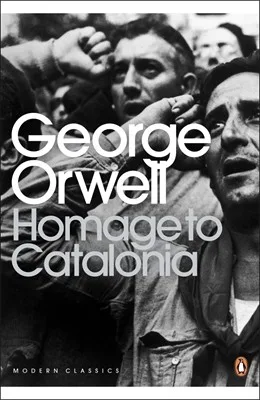
George Orwell recounts his personal involvement in the Spanish Civil War, specifically his time serving within the POUM militia on the Aragon front and in Barcelona. The narrative details the transition from the revolutionary atmosphere of 1936 to the internal factional violence of May 1937. Orwell describes the physical realities of trench warfare, including lice, cold, and malfunctioning weaponry, while documenting how the Communist party suppressed rival leftist groups. He analyzes the political shifts that moved the conflict from a social revolution to a conventional war prioritized by Soviet interests.
Students of political history and journalism read this book to understand the mechanisms of political betrayal and wartime propaganda. It serves as a primary source for those examining the rift between Stalinists and Trotskyists during the 1930s. The reader gains a clear perspective on how ideological purity is often discarded for state power and how media narratives can diverge from lived experience. It provides a foundational look at the disillusionment that shaped Orwell’s later critiques of totalitarianism and objective truth.
Balanced in tone; a moderate read.
Best for readers like The Story Seeker. Which reader are you?
- Published
- 1938
- Language
- EN
Quotes by George Orwell
More →All animals are equal, but some animals are more equal than others.
Animal Farm
Who controls the past controls the future. Who controls the present controls the past.
1984
In a time of deceit, telling the truth is a revolutionary act.