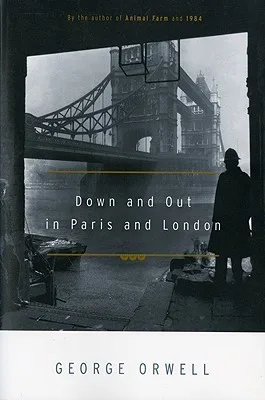
Down and Out in Paris and London
George Orwell’s 1933 memoir chronicles his deliberate descent into poverty within two European capitals. The narrative begins in Paris, where Orwell works as a plongeur, a menial dishwasher in luxury hotel kitchens. He documents the grueling sixteen-hour shifts, the rigid hierarchy among staff, and the constant hunger stemming from precarious wages. Moving to London, the focus shifts to the life of a tramp. Orwell navigates a network of charitable casual wards known as spikes, observing the vagrancy laws that criminalize being homeless and the social structures that keep the impoverished in a cycle of destitution.
Sociologists, political activists, and historians read this book to understand the mechanical realities of the low-wage economy. It serves those interested in the crossover between undercover investigative journalism and the politics of class. A reader walks away with a blunt assessment of how poverty functions as a trap rather than a personal failing. The text provides a map of the bureaucratic hurdles faced by the unhoused and offers a direct critique of the economic utility of low-status labor in modern society.
Contemplative; a moderate read.
Best for readers like The Escapist Adventurer. Which reader are you?
- Published
- 1933
- Language
- EN
Quotes by George Orwell
More →All animals are equal, but some animals are more equal than others.
Animal Farm
Who controls the past controls the future. Who controls the present controls the past.
1984
In a time of deceit, telling the truth is a revolutionary act.