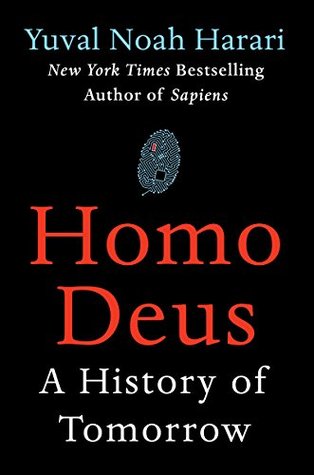
Homo Deus: A History of Tomorrow
The text outlines how humanity, having largely managed the historical threats of famine, war, and plague, is refocusing its efforts on achieving immortality, bliss, and god-like powers. Harari argues that the shift from human-centered liberalism to dataism signals a future where biochemical algorithms and external processing power supersede human intuition. He analyzes the transition from Homo Sapiens to Homo Deus, illustrating how biotechnology and artificial intelligence could create a biological elite while devaluing the consciousness of the masses.
Readers interested in the intersection of evolutionary biology and technological forecasting use this book to examine the potential obsolescence of human agency. It appeals to those seeking to understand the structural shifts in global power caused by high-tech decoupling and data-driven decision-making. The reader finishes the book with a concrete framework for assessing how silicon-based systems might eventually dictate social and ethical norms previously governed by human religions.
Insights from Homo Deus: A History of Tomorrow
“Famine, plague and war are likely to remain high on our agenda in the coming decades.”
Humans used to pray for protection from plague and famine. Now we largely view those as technical glitches we can solve.
“If it feels good - do it.”
Humanism puts our feelings at the center of the universe. We make decisions based on what feels right rather than what a god says.
“Organisms are algorithms.”
Dataism suggests we are just biochemical algorithms. If a computer knows our patterns better than we do, it might make better life choices for us.
“Sapiens rule the world because only they can weave an intersubjective web of meaning.”
Our ability to create shared myths is our greatest strength. Money and human rights only exist because we all agree to believe in them together.
- Published
- 2015
- Publisher
- Prabhat Prakashan
- Language
- EN